THE ICRI WAY
Philanthropy and Development
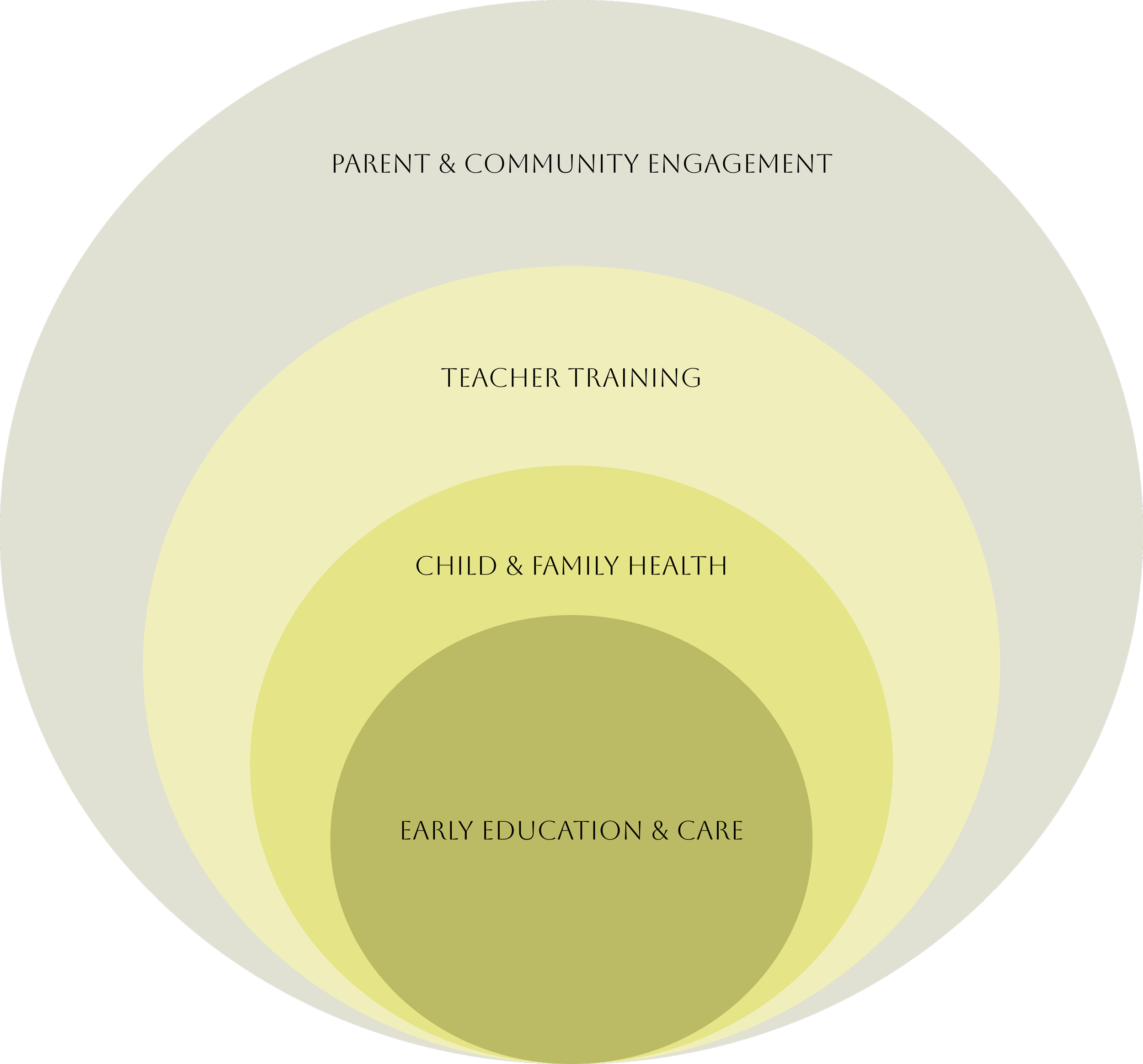
Overview of the Circles of Caring Model:
Since its inception in 1981, ICRI has adhered to key precepts essential for supporting children, families, and communities worldwide:
Local Ownership: ICRI believes that enduring change in communities can only occur when there is truly local "ownership" of programs and projects. This principle underlines the importance of community involvement in change-making initiatives.
Community Integration: Successful outcomes are more likely when community leaders, parents, and those facing challenges are actively involved. Their integration is vital for effective problem-solving.
Cultural Understanding: Sustainable change requires profoundly comprehending local cultural norms and values. These elements are crucial in program planning, development, and implementation.
This philosophy led to ICRI’s Circles of Caring model—a holistic approach that addresses the interconnected needs of children, families, and communities. Projects and programs are created to be tailored to each community, ensuring a comprehensive approach. This fosters substantial, enduring change rooted in self-determination, local leadership, community collaboration, and the empowerment of communities in child-rearing.
Program Delivery:
ICRI works alongside local experts in early childhood education, health, parenting, and teacher training to deliver programs that support brighter futures for children. These initiatives also equip caregivers and educators with modern tools and training in child development.
Collaborations and Impact:
ICRI has partnered with UNICEF, USAID, WHO, and numerous governments and foundations. As a global social entrepreneur, ICRI has launched and managed more than 400 programs in over 50 countries—often in partnership with local governments and community organizations.